3D Home Interior Pack: Design Essentials
Creating a compelling visual identity for home-related projects often feels like walking a tightrope. You need images that look professional and polished, but hiring a 3D artist for every single banner or website update is rarely feasible for small businesses, freelancers, or solo entrepreneurs. This is where a curated resource like the 3D Home Interior Pack becomes an invaluable asset. It bridges the gap between generic stock photography and expensive custom rendering, offering a middle ground that is both flexible and high-quality.
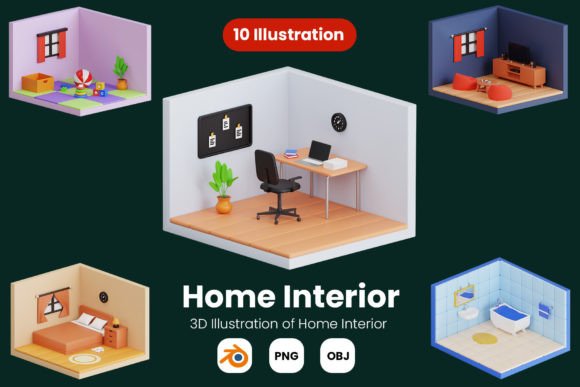
At its core, this pack is a comprehensive collection of 3D designs focused entirely on the domestic environment. It covers every essential part of a house, from the cozy intimacy of a bedroom to the functional elegance of a bathroom, the social hub of the living room, and the communal space of the dining area. Rather than providing flat, static images that limit your creative control, this pack delivers the actual building blocks of digital design. It is tailored for those who want to decorate their UI/UX layouts, create eye-catching banners, or design posters without starting from scratch.
Why Modern Creators Need Flexible 3D Assets
In today’s digital landscape, consistency is key. Whether you are running a real estate blog, an interior design portfolio, or an e-commerce store selling home goods, your visual content needs to speak the same language. Traditional stock photos often suffer from inconsistent lighting, varying color grades, and differing perspectives. One image might be warm and sunny, while the next is cool and moody. This disconnect can make a website feel disjointed and unprofessional.
The 3D Home Interior Pack solves this by providing a unified aesthetic. Because all the illustrations are created within the same 3D ecosystem, they share a coherent style, lighting setup, and level of detail. This uniformity allows you to build a seamless visual narrative across your platforms. For a beginner in web design, this means you don’t need to spend hours color-correcting images to make them match. For a seasoned marketer, it means faster campaign rollout times because the assets are ready to deploy.
Moreover, the versatility of 3D assets extends beyond simple decoration. In UI/UX design, context matters. If you are designing an app for furniture shopping, having isolated, high-quality 3D elements allows you to place products in realistic settings without cluttering the interface. You can use the living room scenes to showcase sofas or the dining room setups to highlight tableware. The ability to mix and match these elements gives you creative freedom that static photography simply cannot offer.
Breaking Down the File Formats and Compatibility
One of the most significant advantages of this pack is the variety of file formats included. Understanding what you get is crucial to maximizing its value. The package includes ten 3D Blender files, ten OBJ files, ten JPGs, and ten PNGs. This diverse range ensures compatibility with almost any workflow, whether you are a non-technical user or a 3D modeling expert.
For those who are new to 3D design, the JPG and PNG files are your best friends. These are high-resolution images, measuring 3000x2000 pixels, which is more than sufficient for web banners, social media posts, and even printed posters. The PNG files are particularly useful because they often come with transparent backgrounds, allowing you to layer furniture or room elements directly onto your website background or marketing materials without awkward white boxes around them. You can drop these into Adobe Photoshop or Illustrator and start designing immediately.
For users with more technical skills, the Blender and OBJ files unlock the true potential of the pack. Blender is a powerful, open-source 3D creation suite, and OBJ is a universal 3D geometry format. Having access to these source files means you are not stuck with the default camera angles or lighting. You can import the models into Blender, change the texture of a sofa, move a lamp to a different corner, or adjust the lighting to match your brand colors. This level of customization ensures that your visuals remain unique to your brand, even if others are using the same base pack.
Practical Applications for Business and Creativity
The utility of the 3D Home Interior Pack spans across various industries and project types. Here are some realistic ways you can integrate these assets into your work:
- Real Estate and Architecture Websites: Use the high-resolution JPGs as hero images for landing pages. The clean, modern aesthetic helps convey a sense of luxury and order, appealing to potential buyers or renters.
- E-Commerce Product Listings: If you sell home decor items, use the PNGs to create composite images. Place your product into a beautifully rendered living room scene to help customers visualize how it would look in their own homes.
- Social Media Marketing: Create consistent Instagram or Pinterest boards using the varied room themes. The cohesive look helps build brand recognition, making your feed stand out in a crowded marketplace.
- UI/UX Prototyping: Designers can use the 3D elements to create realistic mockups for apps related to home automation, interior design, or cleaning services. The assets provide a professional backdrop that enhances the perceived quality of the app interface.
- Educational Content: Bloggers and educators writing about home organization or design trends can use these illustrations to break up text and provide visual examples without worrying about copyright issues associated with random internet images.
Important Considerations Before You Start
While the 3D Home Interior Pack is designed to be user-friendly, there are a few things to keep in mind to ensure you get the best results. First, consider your software proficiency. If you plan to use the Blender or OBJ files, you will need a basic understanding of 3D software. If you are not comfortable with 3D modeling, stick to the JPG and PNG files, which are ready to use in standard graphic design tools like Adobe Photoshop and Illustrator.
Second, think about resolution requirements. The images provided are 3000x2000 pixels, which is excellent for digital use and standard printing. However, if you are creating large-format billboards or massive trade show displays, you may need to check if scaling these images affects their sharpness. For most web and print applications, though, this resolution is more than adequate.
Finally, remember that these assets are tools, not magic solutions. The best designs come from thoughtful composition. Don’t just slap a 3D room onto a banner; consider how it interacts with your text, your call-to-action buttons, and your overall brand color palette. Use the transparency of the PNGs to blend the 3D elements seamlessly into your layout. By treating these assets as foundational building blocks rather than final products, you can create truly distinctive and engaging visual content.
In conclusion, the 3D Home Interior Pack offers a practical, cost-effective solution for anyone looking to elevate their home-themed visual content. By providing a mix of ready-to-use images and editable 3D models, it empowers creators of all skill levels to produce professional-grade designs. Whether you are decorating a website, crafting a marketing campaign, or prototyping a new app, this pack provides the versatility and quality needed to succeed in a visually driven world.