Icon 3D Flower Carving: A Practical Guide to Modern Digital Ornamentation
In the evolving landscape of digital graphic design, the intersection of traditional craftsmanship and modern rendering techniques has created a unique niche for decorative assets. Icon 3D Flower Carving represents this synthesis, offering designers a versatile toolset that bridges the gap between flat vector illustration and textured, dimensional art. For professionals ranging from marketing agencies to independent creators, understanding the utility and aesthetic potential of these assets is crucial for enhancing visual communication without compromising on load times or design coherence.
This article evaluates the practical applications, technical characteristics, and strategic value of incorporating 3D floral carving icons into contemporary design workflows. By examining these elements through the lens of usability and artistic merit, we can determine how they serve various commercial and creative needs.
The Fusion of Tradition and Digital Precision
The concept behind Icon 3D Flower Carving draws heavily from historical ornamental traditions, such as Thai temple art and intricate guilloche patterns found in security printing and classical architecture. However, unlike static historical references, these digital assets are engineered for modern flexibility. They retain the beauty and complexity of hand-carved rosettes and floral motifs but are delivered in formats that allow for seamless integration into digital media.
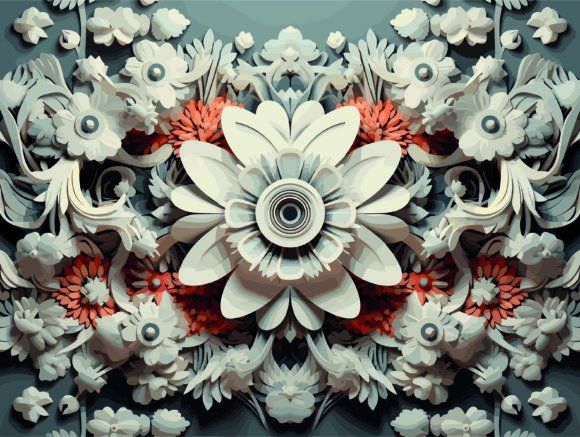
What makes this approach worth discussing is its ability to convey sophistication and warmth simultaneously. Traditional floral designs can sometimes feel dated or overly formal. By applying a 3D rendering technique, designers introduce depth, shadow, and perspective, making the icons feel tactile and immediate. This "carved" effect adds a layer of visual interest that flat icons often lack, providing a sense of premium quality to branding materials, user interfaces, and promotional graphics.
Key Characteristics and Design Versatility
To effectively utilize these assets, one must understand their core components. High-quality Icon 3D Flower Carving sets typically exhibit several defining traits:
- Dimensional Depth: Unlike standard 2D vectors, these icons utilize lighting and shading to simulate physical carving. This creates a realistic appearance of depth, making the flower shapes pop against backgrounds.
- Stylistic Range: The collection often spans from cute and fun cartoon-style emoticons to serious, abstract geometric floral patterns. This versatility allows them to be used in diverse contexts, from playful Valentine’s Day campaigns to elegant corporate branding.
- Color Adaptability: While many designs feature vibrant hues like pink, violet, and soft pastels to emphasize romance and beauty, the underlying structure often supports recoloring. This is essential for maintaining brand consistency across different projects.
- Isolated Elements: Each icon is typically presented as an isolated element, meaning it has a transparent background. This facilitates easy placement over various textures, colors, or photographic backgrounds without cumbersome editing.
The inclusion of specific cultural motifs, such as Thai art patterns or Pud Tan-inspired designs, adds a layer of uniqueness. These elements are not merely generic flowers; they carry cultural weight and artistic heritage, which can be leveraged to create distinctive visual identities for brands looking to stand out in a saturated market.
Practical Applications in Commercial Design
The true value of any design asset lies in its application. Icon 3D Flower Carving is not just decorative; it serves functional roles in communication and user experience. Here is how these assets perform in real-world scenarios:
Branding and Identity
For businesses in the beauty, wellness, or lifestyle sectors, these icons offer a way to communicate elegance and care. A spa might use a soft, carved lotus icon to represent tranquility, while a cosmetic brand could utilize a detailed rose emblem to signify luxury. The 3D aspect ensures that the logo or symbol feels substantial and memorable, aiding in brand recall.
Digital Marketing and Social Media
In the fast-paced environment of social media, visuals must capture attention quickly. The fun and romantic nature of certain floral emojis and characters makes them ideal for engagement-driven content. For instance, during Valentine’s season, using heart-shaped floral carvings can enhance the emotional resonance of posts. Furthermore, the abstract and modern interpretations of these flowers allow for creative infographic elements that break the monotony of standard stock photography.
User Interface (UI) Enhancement
While minimalism dominates UI design, there is a growing trend toward "neo-skeuomorphism" or soft 3D elements that add warmth to digital products. Icon 3D Flower Carving can be used sparingly in apps related to gardening, dating, or event planning to provide visual cues that are both intuitive and aesthetically pleasing. The clear lines and distinct shapes ensure that even with added depth, the icons remain recognizable at small sizes.
Evaluating Quality and Usability
When selecting design resources, professionals must assess quality beyond mere appearance. The production standards of Icon 3D Flower Carving sets are critical for long-term value. High-quality sets are the result of meticulous creation processes, ensuring that every curve and line is precise. This attention to detail prevents pixelation and artifacts when the images are scaled or printed.
Flexibility is another major consideration. Because these designs are often available in vector formats alongside high-resolution raster renders, they offer dual benefits. Vectors allow for infinite scalability without loss of quality, essential for large-format printing like banners or packaging. Raster renders, on the other hand, provide ready-to-use images with pre-calculated lighting and texture, saving time for web developers and social media managers who need quick turnaround times.
Moreover, the consistency of the style within a set is vital. A cohesive collection ensures that all icons share the same lighting direction, line weight, and color palette. This uniformity is crucial for maintaining a professional look across a entire campaign or product line. Inconsistent assets can make a design appear disjointed and amateurish.
Who Benefits Most from These Assets?
While visually appealing to a broad audience, specific groups will find greater utility in Icon 3D Flower Carving:
- Graphic Designers and Illustrators: These professionals can use the icons as base elements for larger compositions, saving hours of modeling or drawing time. They serve as excellent starting points for custom illustrations.
- Small Business Owners and Entrepreneurs: For those managing their own marketing, having access to high-quality, pre-made decorative elements allows for the creation of polished materials without hiring expensive agencies.
- Web Developers and UI/UX Designers: The isolated nature of these icons makes them easy to integrate into code. They can enhance user experience by adding subtle visual delight to interactive elements.
- Educators and Content Creators: Teachers and bloggers can use these engaging visuals to break up text, illustrate concepts, or make educational materials more appealing to students and readers.
Limitations and Best Practices
Despite their advantages, there are limitations to consider. The 3D rendering style may not suit every brand identity. Companies aiming for a strictly minimalist, flat, or industrial aesthetic might find these ornate, colorful icons conflicting with their visual language. It is essential to evaluate whether the cute or romantic tone aligns with the brand’s voice.
Additionally, overuse can lead to visual clutter. Because these icons are detailed and textured, using too many on a single page can overwhelm the viewer. Best practice suggests using them as accent pieces rather than primary content carriers. Balance is key; pair these rich visuals with ample white space and simple typography to let the artwork breathe.
Another consideration is file size. High-resolution 3D renders can be larger than simple vector shapes. For web performance, it is advisable to optimize images or use SVG versions where possible to ensure fast loading times without sacrificing visual quality.
Conclusion: A Valuable Addition to the Creative Toolkit
Icon 3D Flower Carving offers a compelling blend of artistic tradition and modern digital convenience. Its strength lies in its ability to add depth, emotion, and sophistication to a wide range of design projects. Whether used for a romantic Valentine’s campaign, a luxurious beauty brand logo, or an engaging social media post, these assets provide a reliable and high-quality solution for visual communication.
For professionals seeking to elevate their design work, integrating these elements can streamline workflow and enhance output quality. By understanding their characteristics and applying them strategically, designers and business owners can leverage the full potential of these decorative symbols. As with any design tool, success depends on thoughtful application, ensuring that the beauty of the flower carving complements rather than competes with the overall message. All designs produced with such care and creation integrity are well-suited for commercial needs, offering lasting value in a competitive visual landscape.